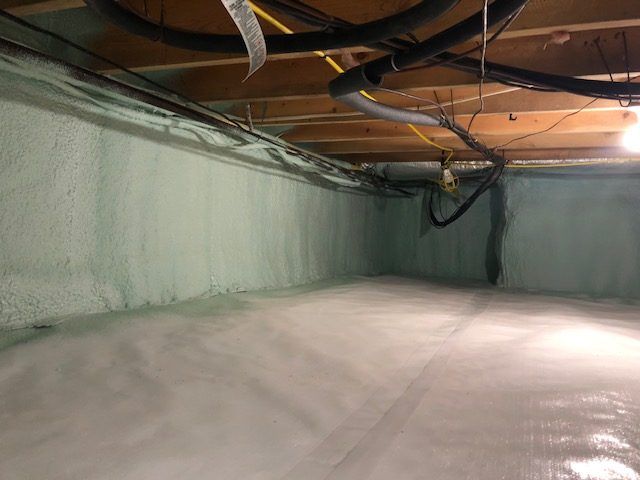
How Much Does Crawl Space Encapsulation Cost? (2026 Delmarva Pricing Guide)
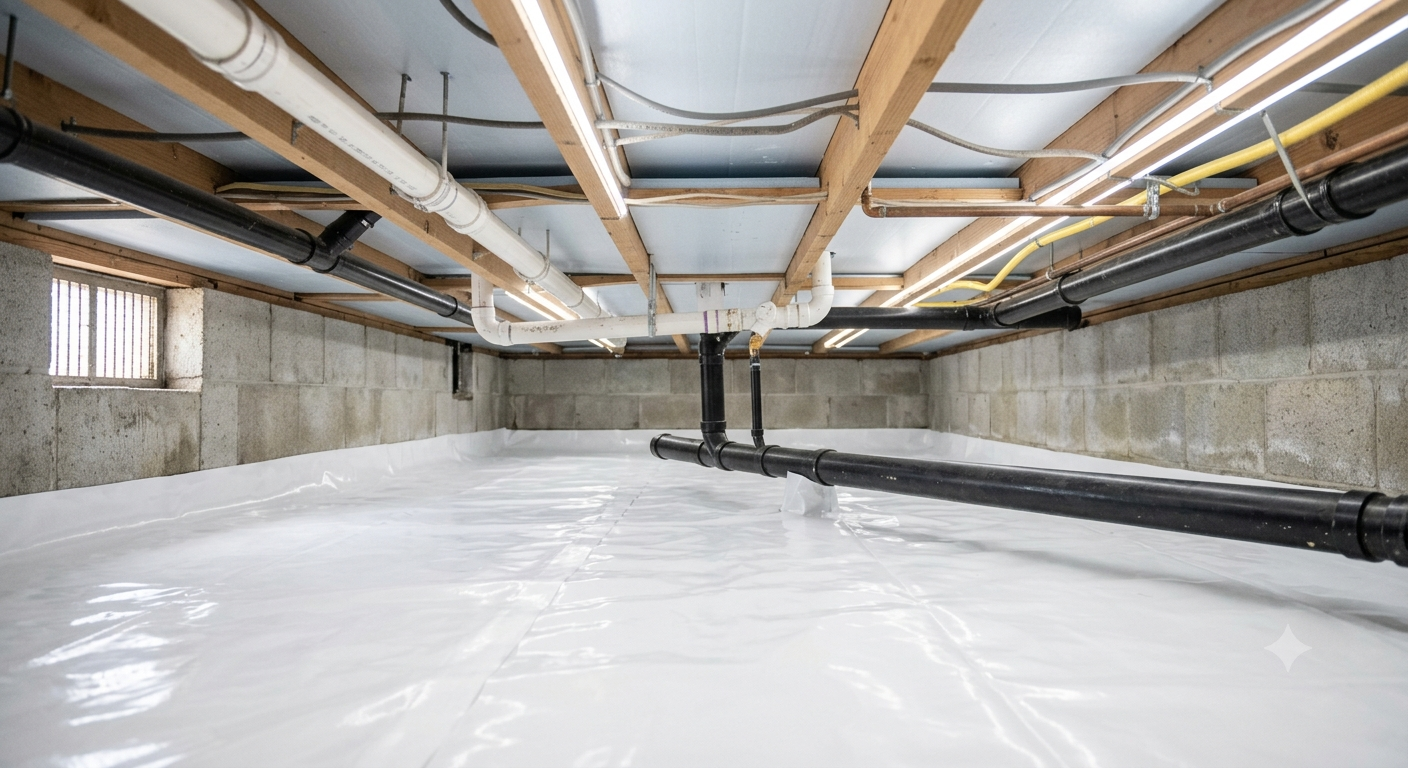
Most Delmarva homeowners pay between $5,000 and $15,000 for complete crawl space encapsulation, with a national average around $5,500 and typical pricing of $3 to $10 per square foot. A small, dry crawl space that just needs a sealed vapor barrier lands at the low end. A large space with standing water, mold, or damaged framing lands at the high end.
That range is wide, and most contractors will not narrow it down until you have sat through a sales pitch. We would rather show you the math up front. FLC Energy has spent 32 years working under homes in Maryland and Delaware, and this guide breaks down what encapsulation really costs on Delmarva, what moves the number, and how local rebates bring it down. If you want the full step-by-step process first, start with our Guide to Crawlspace Encapsulation, then come back here for the numbers.
The Quick Answer: Average Crawl Space Encapsulation Cost in 2026
- National average: about $5,500, with most complete projects between $5,000 and $15,000
- Basic vapor barrier and sealing only: $1,500 to $4,000
- Standard full encapsulation: $3 to $7 per square foot
- Full system with dehumidifier and drainage: up to $10 to $12 per square foot
- Typical complete Delmarva project: $5,000 to $15,000 before rebates
Those figures line up with 2026 national cost data from Angi and HomeAdvisor, which both put the average crawl space encapsulation cost at $5,500. Delmarva's humidity pushes more local projects toward full systems, and the rebate programs below push the net price back down.
Want a number for your actual house instead of a range? Request a free estimate or call 410-860-8410.
Crawl Space Encapsulation Cost Per Square Foot
Contractors price encapsulation by the square foot because the liner, the insulation, the labor hours, and the dehumidifier capacity all scale with the footprint under your home. Labor alone is 50 to 70 percent of the total bill.
- $2 to $4 per square foot: basic sealing and a standard vapor barrier in a dry, accessible space
- $3 to $7 per square foot: standard full encapsulation for a crawl space in fair condition
- $8 to $12 per square foot: full systems that also need drainage, mold treatment, or heavy prep work
Quick math for common Delmarva footprints: a 1,000 square foot crawl space typically runs $3,000 to $7,000 for standard encapsulation, a 1,500 square foot space runs $4,500 to $10,500, and a 2,000 square foot space runs $6,000 to $14,000.
Clearance matters more than most homeowners expect. When installers have less than about 24 inches of working height, every task slows down, and labor costs typically climb 15 to 30 percent.
What You Are Actually Paying For: The Cost Breakdown
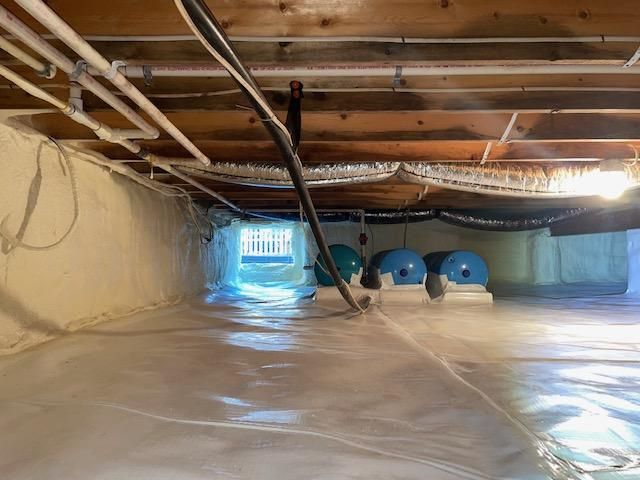
Encapsulation is a system, not a single product. A complete project includes several line items, and a trustworthy quote prices each one so you can see exactly where your money goes:
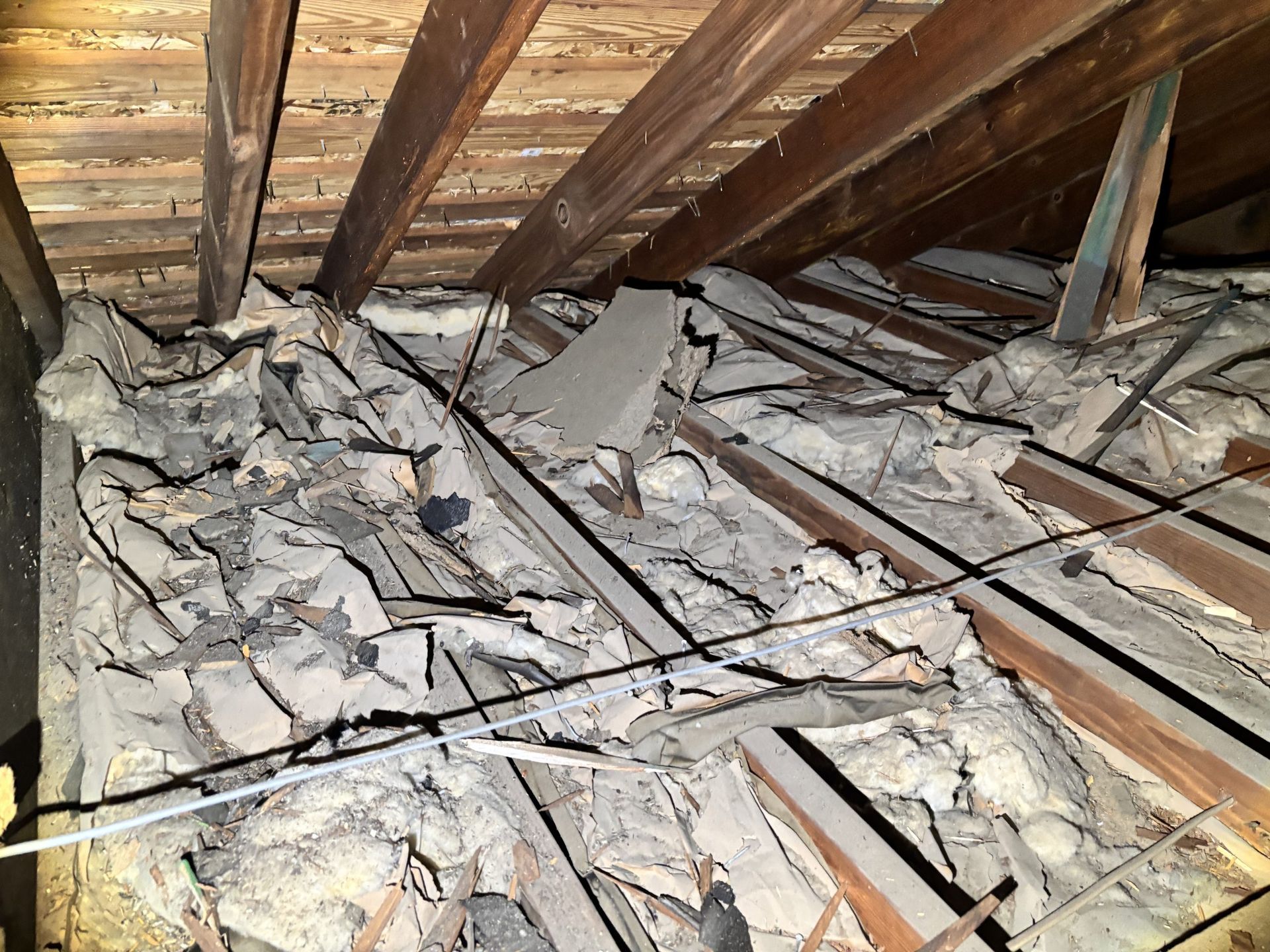
- Inspection, cleanout, and prep. Removing debris, fallen insulation, and old plastic so the new system seals to clean surfaces. Often bundled into the base price.
- Mold treatment: $1,500 to $4,000. Required whenever active growth is found on framing or subfloor, and worth doing right the first time.
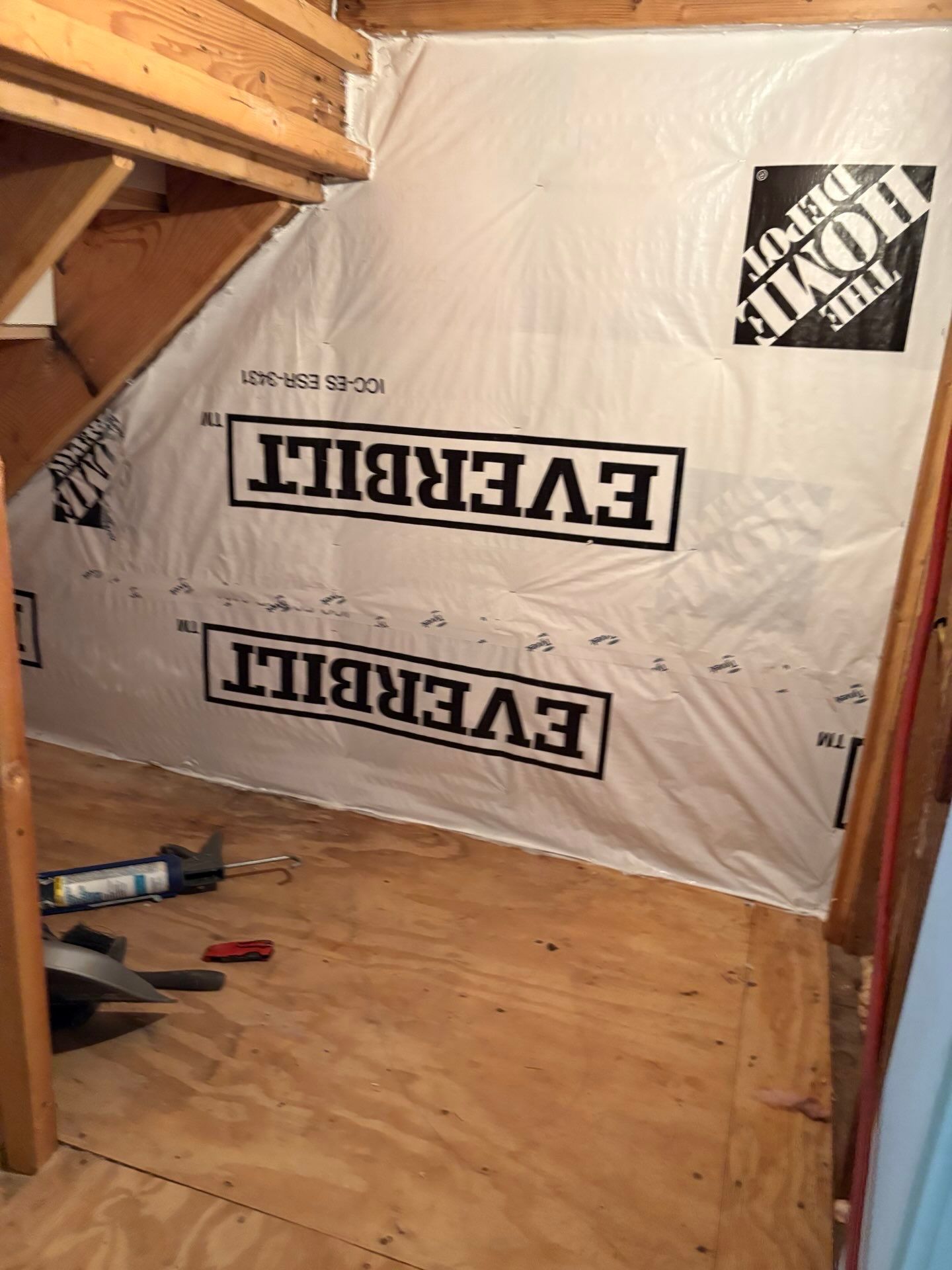
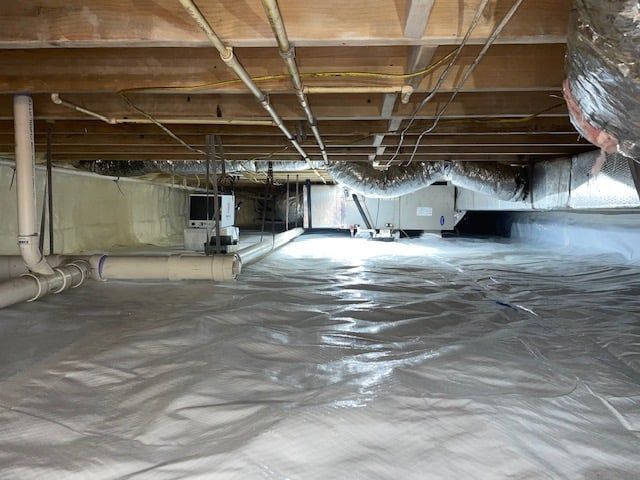
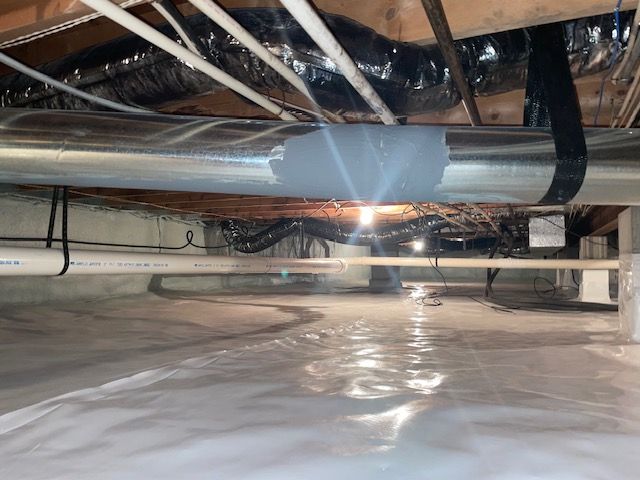
- Crawl space vapor barrier: $1,500 to $4,000 installed as a standalone project. Thickness and detailing are everything here. A reinforced 12 to 20 mil liner, sealed at every seam and wrapped up piers and walls, performs for decades, while thin 6 mil sheeting tears during the first service visit. Our vapor barrier page covers the material grades we install and why.
- Air sealing vents, doors, and penetrations. This is the step that stops humid outdoor air from pouring in all summer, and it is the step cut-rate quotes skip most often.
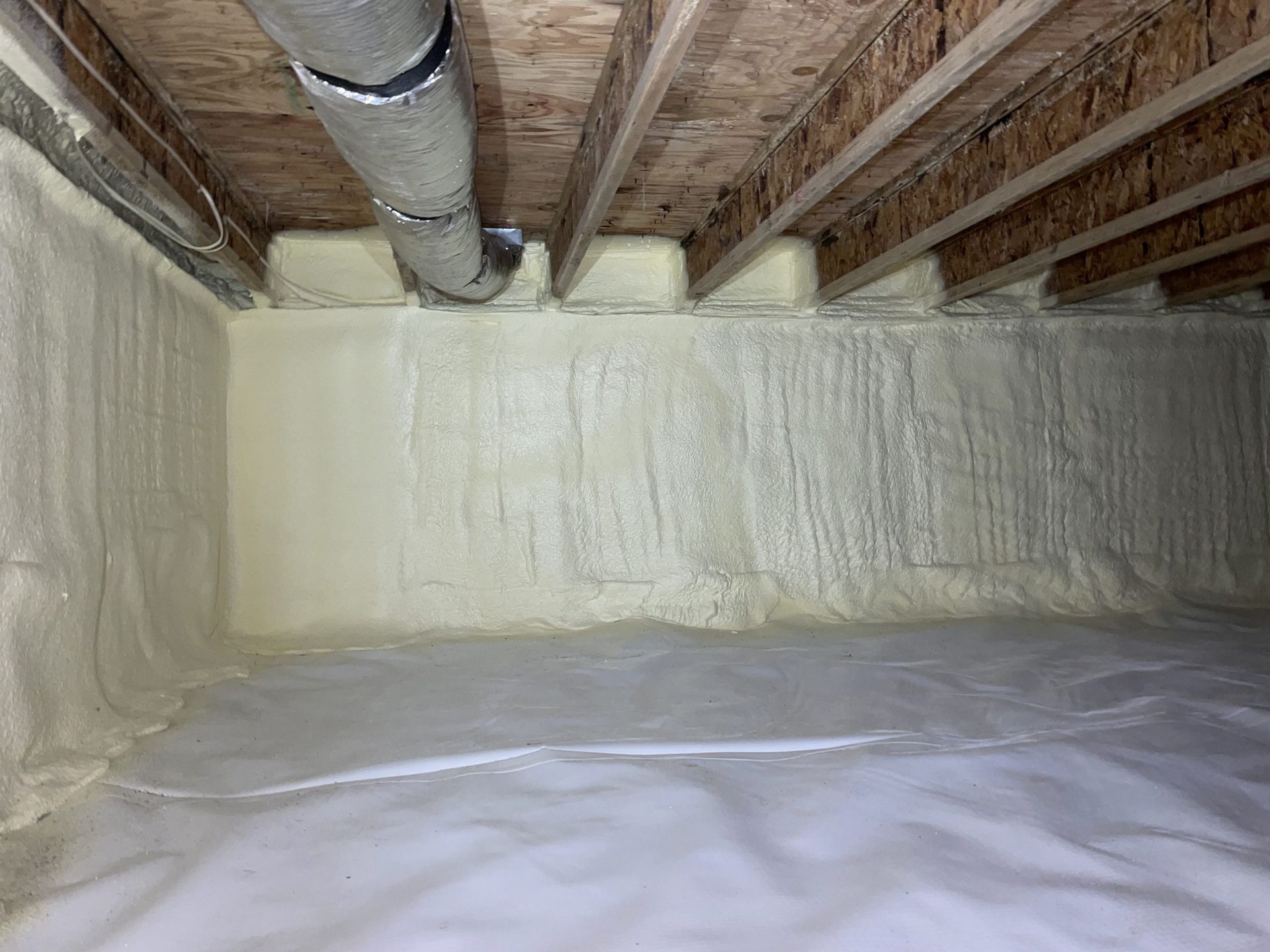
- Insulation: $1.00 to $4.50 per square foot ($500 to $3,700). Foundation walls or rim joists, using rigid foam board or closed cell spray foam depending on the space.
- Crawl space dehumidifier: roughly $1,000 to $2,500 installed. The workhorse that keeps the space dry through a Delmarva August. Sizing and condensate drainage matter, which we explain on our crawlspace and basement dehumidifiers page.
- Drainage, when needed: commonly $2,000 to $6,000. Standing water has to be solved before anything gets sealed. More on this below.
7 Factors That Change the Cost to Encapsulate a Crawl Space
- Size and layout. More square footage means more liner, more insulation, and more hours. Lots of piers, tight corners, and ductwork add cutting and sealing time.
- Moisture severity. A dry space needs a barrier and air sealing. A damp space adds a dehumidifier. A wet space adds drainage and usually mold work. Each step up in severity typically adds $1,500 to $5,000 to the project.
- Drainage needs. If water pools after storms, an interior French drain and sump pump come first, because sealing a wet crawl space just hides the problem.
- Liner grade. 20 mil reinforced liners cost more than lighter material, and proper seam taping, pier wraps, and mechanical fastening take real labor. This is where lowball quotes quietly downgrade.
- Insulation approach. Rigid foam board on walls is the budget-friendly standard. Closed cell spray foam on walls and rim joists costs more and delivers a tighter, higher R-value envelope.
- Structural repairs. Bouncy or sagging floors usually mean moisture reached the framing first. Sistering joists and adding supports through our structural repair service typically runs $500 to $8,000 depending on damage, and is quoted separately from encapsulation.
- Access and obstructions. Hatch size, clearance height, plumbing runs, and old debris all change how fast a crew can work, and labor is most of the bill.
Crawl Space Encapsulation Cost in Maryland and Delaware
Delmarva sits low, flat, and humid. High water tables across the Eastern Shore, sandy coastal soils, and long muggy summers mean local crawl spaces take on more moisture than the national norm. That shapes local pricing in two ways.
First, fewer projects here qualify for the bare-minimum tier. In Wicomico, Worcester, Somerset, and Dorchester Counties in Maryland, and throughout Sussex and Kent Counties in Delaware, damp conditions usually call for a true sealed liner plus a dehumidifier rather than plastic alone. Second, drainage shows up in Delmarva quotes more often than it does inland, especially in low-lying areas around Salisbury, Berlin, Ocean Pines, Seaford, and Millsboro.
The practical result: most complete crawl space encapsulation projects in Maryland and Delaware fall in that $5,000 to $15,000 window, with the middle of the range being the most common outcome for a typical rancher or two-story home on a full crawl space. The upside of buying here is real, though: both states run utility efficiency programs that can hand a meaningful chunk of that money back.
Rebates and Financing: How MD and DE Homeowners Lower the Cost
Encapsulation overlaps heavily with the air sealing and insulation measures that utility efficiency programs were built to fund. Both states' programs start with a professional home energy audit, which is exactly how a proper encapsulation should be scoped anyway.
Maryland: Delmarva Power Home Performance with ENERGY STAR
Funded through EmPOWER Maryland, Delmarva Power's Home Performance with ENERGY STAR program offers a $100 home energy assessment and up to $10,000 in rebates on qualifying improvements, including air sealing and insulation work in crawl spaces. Financing on approved upgrades starts as low as 0 percent for 24 months, and income-qualified tiers can cut out-of-pocket costs even further.
Delaware: Energize Delaware Home Performance with ENERGY STAR
Energize Delaware covers most of the cost of your home energy assessment and pays incentives on qualifying air sealing and insulation upgrades. Starting July 1, 2026, the program's incentive bonus increases from 20 percent to 25 percent on qualifying work, and its Home Energy Efficiency Loan Program adds low-rate financing. One important rule: your contractor must reserve the rebate before work begins, so do not sign anything until that paperwork is in motion.
A 2026 reality check: the federal 25C energy efficiency tax credit expired for projects completed after December 31, 2025, so these utility and state programs are now the main lever for lowering your price. Program terms change through the year, and we confirm current amounts with you during your assessment.
Is Crawl Space Encapsulation Worth It?
For most homes on Delmarva, yes. Here is the honest math:
- Energy savings. Field research by the building science nonprofit Advanced Energy measured heating and cooling savings of roughly 15 to 18 percent in homes with sealed, unvented crawl spaces compared to vented ones. For a fuller look at what efficiency work returns locally, see how much weatherization saves in Maryland.
- Healthier air upstairs. Because of the stack effect, a meaningful share of the air on your first floor rises up out of the crawl space. Sealing and drying that space means less musty odor, fewer allergens, and less mold risk where you actually live.
- Avoided repairs. Chronic crawl space moisture eventually sends a bill either way: rot, mold remediation, pest damage, cupped hardwood, rusted ductwork. Encapsulation is the version of that bill that adds value instead of just fixing damage.
- Resale protection. Home inspectors crawl under houses, and buyers walk away from bad crawl space notes. A clean, encapsulated space reads as a well-maintained home when it is time to sell.
When is it not worth it? If your crawl space stays genuinely dry year-round, a properly detailed vapor barrier with air sealing may be all you need, and an honest assessment should tell you that. And if you are weighing a fully sealed system against tying the space into your HVAC, our comparison of conditioned vs. encapsulated crawlspaces walks through when each approach makes sense.
How to Compare Crawl Space Encapsulation Quotes
If you are holding two or three estimates that sit thousands of dollars apart, they are almost never pricing the same job. Line them up against this list:
- Liner spec: thickness in mils, reinforced or not, and how seams, piers, and wall attachment are detailed
- Moisture readings: did they measure wood moisture content and humidity, or just look around with a flashlight?
- Dehumidifier: brand, capacity, and where the condensate drains
- Drainage scope: if there is evidence of standing water, is drainage included or conveniently missing?
- Insulation: material, R-value, and whether walls or rim joists are covered
- Rebate handling: who files the program paperwork, and whether the rebate is reserved before work starts
- Warranty: liner, workmanship, and equipment coverage, in writing
The cheapest quote usually wins by deleting line items you will end up paying for later. You can see everything a complete system involves on our crawl space services page.
Why Delmarva Homeowners Get Their Number from FLC Energy
FLC Energy is Delmarva's Home Performance Company. We have spent 32 years under homes from Salisbury to the beaches, we hold BPI Gold Star certification, and we are Pearl Certified. More importantly, we price crawl spaces the way we fix them: your house is a system, and moisture, air, insulation, and equipment all interact. Quoting one piece without checking the others is how encapsulations fail early.
That is why every FLC encapsulation starts with a whole-house assessment instead of a flashlight walk-through and a sales binder, and why our quotes itemize every component listed above.
Crawl Space Encapsulation Cost: FAQs
What is the average crawl space encapsulation cost?
The average crawl space encapsulation cost is about $5,500 nationally, and most complete projects fall between $5,000 and $15,000. Basic vapor barrier work can cost as little as $1,500, while large or badly damaged crawl spaces can run past $15,000.
What does crawl space encapsulation cost per square foot?
Crawl space encapsulation costs $3 to $7 per square foot for a standard project. Basic sealing work runs $2 to $4 per square foot, while full systems that include a dehumidifier, drainage, or major prep can reach $10 to $12 per square foot.
How much does a crawl space vapor barrier cost?
A crawl space vapor barrier costs about $1,500 to $4,000 installed as a standalone project. Price depends on square footage and liner grade: a reinforced 12 to 20 mil liner with sealed seams costs more than thin 6 mil sheeting but lasts decades longer under a home.
How much does a crawl space dehumidifier cost?
A crawl space dehumidifier typically costs $1,000 to $2,500 installed, including the unit, setup, and condensate drainage. It is the component that keeps an encapsulated crawl space dry through Delmarva's humid summers, so cutting it to save money usually backfires.
Is crawl space encapsulation worth it?
Yes, for most Delmarva homes. Encapsulation trims heating and cooling waste, protects framing from rot and mold, improves the air you breathe upstairs, and prevents the crawl space notes that scare buyers at resale. In a humid, high water table region, it typically earns its cost back.
Can I encapsulate my crawl space myself?
You can buy liner and tape for far less than a professional install, but DIY encapsulation often traps moisture instead of stopping it when drainage, air sealing, or dehumidification get missed. It can also cost you rebates, since Maryland and Delaware programs require assessments and participating contractors to qualify.
The Bottom Line on Crawl Space Encapsulation Cost
✔ Typical complete Delmarva project: $5,000 to $15,000 before rebates
✔ Per square foot: $3 to $7 standard, up to $10 to $12 with drainage and repairs
✔ Biggest price movers: size, moisture severity, drainage, and structural damage
✔ The vapor barrier and dehumidifier are the two components worth pricing most carefully
✔ Maryland and Delaware utility programs can return thousands through rebates and low-rate financing
✔ A real quote itemizes everything; a cheap quote deletes what you will pay for later
Get a Real Number for Your Crawl Space
Ranges are useful. Your number is better. FLC Energy provides honest, itemized encapsulation estimates across the Eastern Shore of Maryland and southern Delaware, and we help you line up the rebate paperwork that brings the price down.
Request your free quote or Call FLC at 410-860-8410.
Recent Posts